
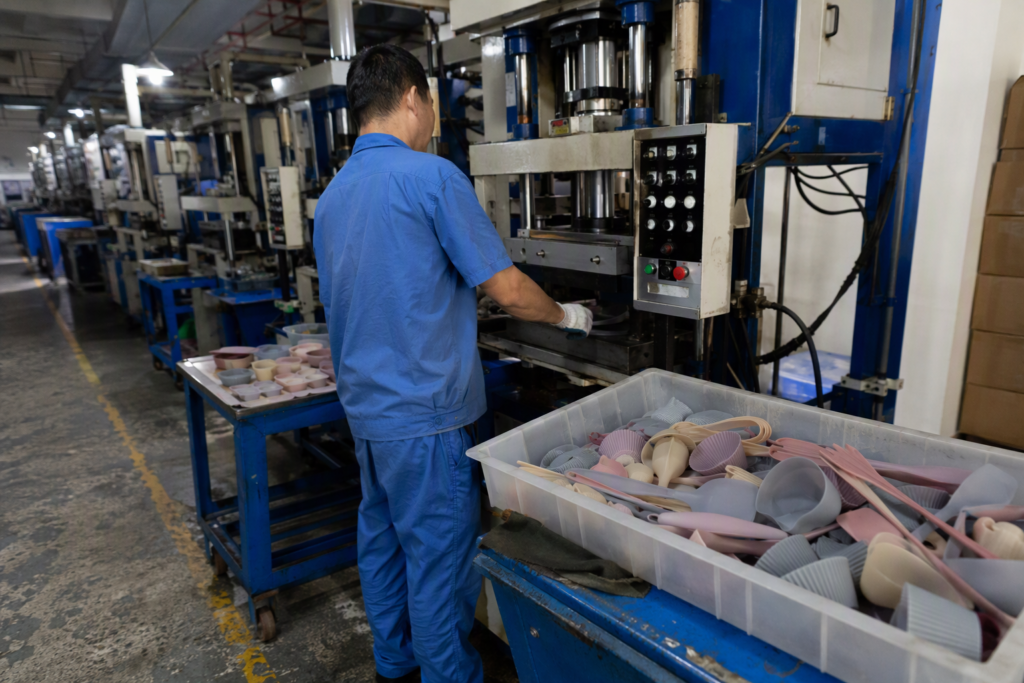
The right silicone kitchenware manufacturer is one that (1) holds verifiable FDA and LFGB food‑contact certification, (2) owns its molding and tooling in‑house rather than outsourcing, (3) runs a documented quality control system such as AQL 2.5 with ISO 9001, (4) offers real OEM/ODM customization from a 3D drawing, and (5) gives you transparent sampling, MOQ and lead‑time commitments in writing. Everything else — price, catalog size, sales responsiveness — is secondary to those five.
This guide walks through each checkpoint in order, with the exact questions and documents to request, plus a 12‑point supplier scorecard you can use on your next sourcing round.
1. Start with food-grade certification — and verify it, don’t just trust it
Silicone touches food, so certification is the first filter. Two standards dominate global sourcing:
- US FDA — silicone for repeat food contact falls under 21 CFR 177.2600 (“Rubber articles intended for repeated use”). It focuses on extraction testing with food simulants such as distilled water and n‑hexane, and keeps migrating substances within GRAS (Generally Recognized As Safe) limits. FDA‑compliant silicone is usually peroxide‑cured and is the mass‑market baseline.
- EU / German LFGB — implemented under the German Food, Feed and Commodities Code (LFGB §30 & §31), built on EU Framework Regulation (EC) No 1935/2004. LFGB is stricter: it adds mandatory sensory testing (the product must not transfer odor or taste), caps volatile organic matter (VOM) at 0.5%, and restricts PAHs. Products that pass may carry the “glass and fork” symbol. LFGB‑grade silicone is almost always platinum‑cured.
| Feature | FDA (US) | LFGB (EU) |
|---|---|---|
| Regulatory basis | 21 CFR 177.2600 | LFGB §30 & §31 (on EC 1935/2004) |
| Typical curing | Peroxide | Platinum |
| Sensory (odor/taste) test | Not required | Mandatory |
| VOM limit | Less stringent | Max 0.5% |
| Market position | Mass market | Premium / professional |
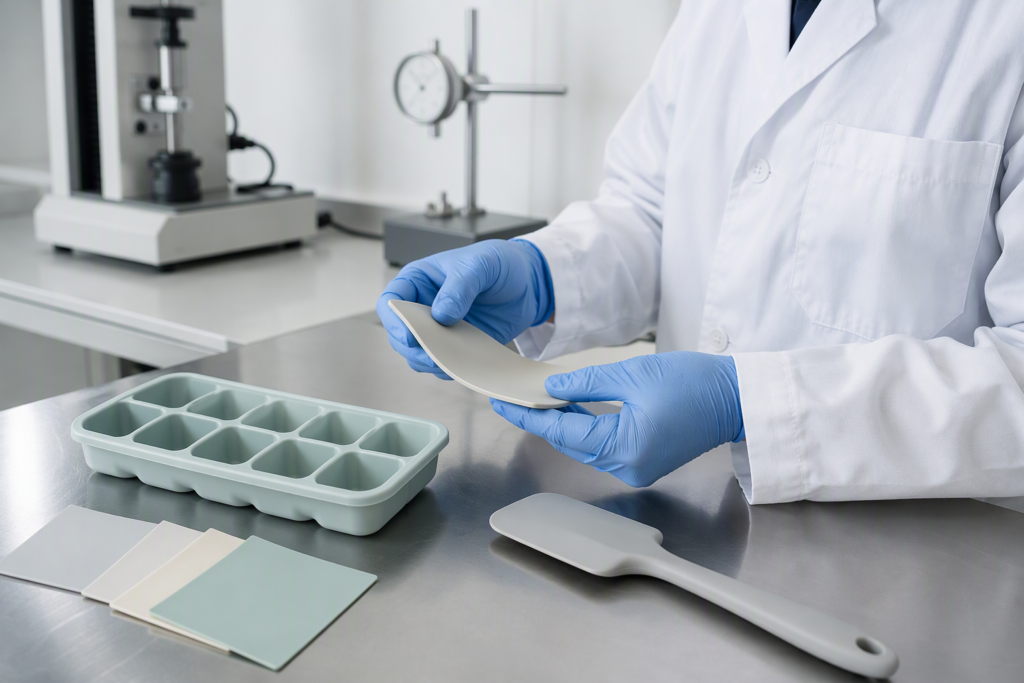
What to request: the manufacturer’s third‑party test reports (not a self‑declared certificate) from an accredited lab, dated within the last 12–24 months, matched to the specific material grade they will use for your order.
Quick field test you can do on a sample: the pinch/twist test. Twist the silicone — if the stress point turns white, it contains plastic fillers; genuine 100% food‑grade silicone holds its color. A properly post‑cured product should also have almost no odor.
2. Confirm they actually manufacture — not just trade
The most common sourcing mistake is buying from a trading company that presents itself as a factory. Traders add margin, lose control over quality, and can’t modify tooling. Look for evidence of real in‑house capability:
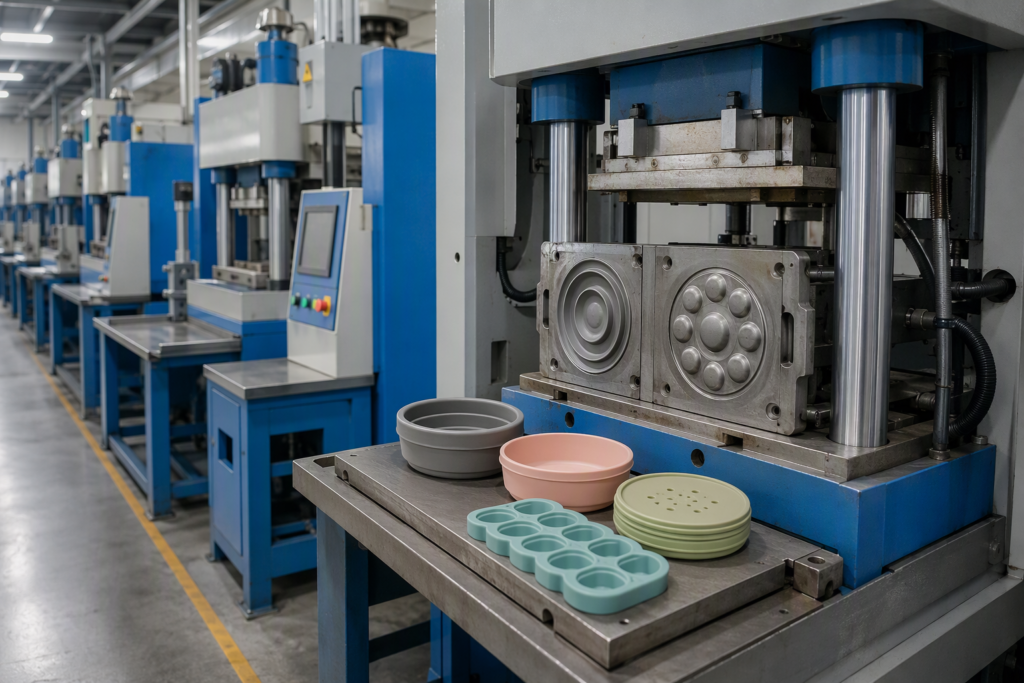
- Own molding and tooling — CNC mold fabrication, not outsourced.
- Injection and compression machines on site — ask how many units and their tonnage.
- A physical plant — address, floor area, and a willingness to host a factory audit or live video walkthrough.
- Stable production history — years in operation, staff count, annual output.
For a typical mid‑size factory you should see a facility in the range of 1,000–5,000 m², 8–15+ molding/injection units, and the ability to run both silicone compression molding and plastic injection under one roof.
Questions to ask:
- How many molding machines do you operate, and what sizes?
- Is mold design done in-house? Can I see your tooling workshop?
- How many SKUs do you produce per year, and for how many export markets?
3. Test the OEM/ODM customization depth
If you sell under your own brand, customization is where the factory creates or destroys your product. A capable partner supports the full chain:
| Customization area | What to confirm |
|---|---|
| Mold / tooling | Can they build from your CAD/STEP file? Revision rounds before approval? |
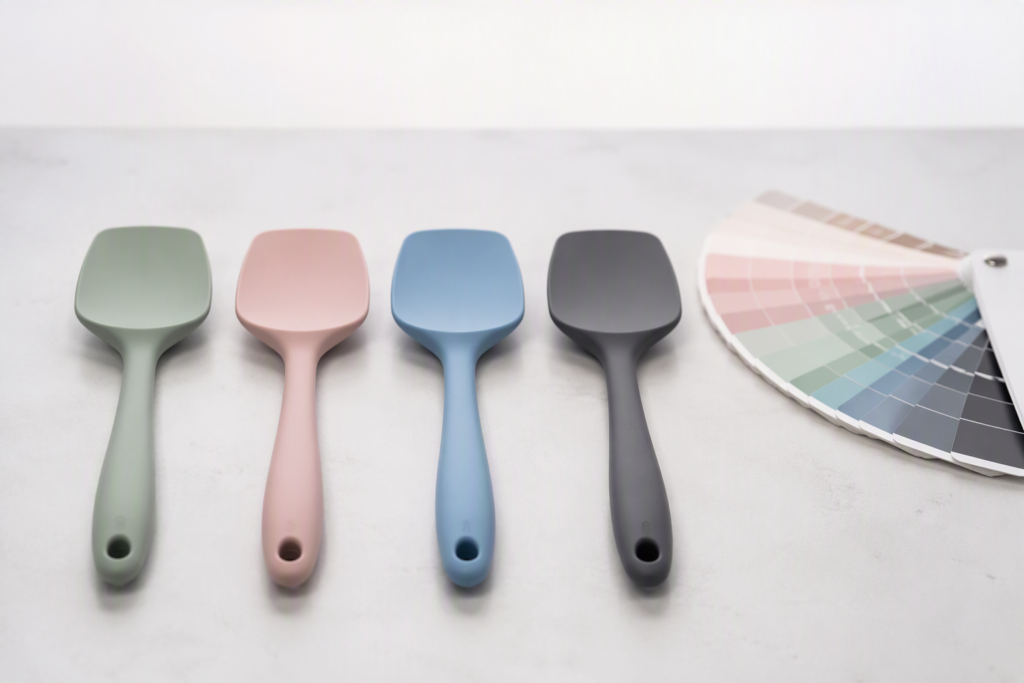
| Color | Pantone (PMS C/U) matching, with physical swatches signed off pre‑production |
| Logo | Silk‑screen, laser, deboss/emboss, or molded‑in |
| Packaging | Color box, OPP bag, shrink wrap, multi‑pack sets, retail‑ready trays |
| Documents | Barcode/FBA labeling, test reports, export documentation |
Red flag: a factory that only accepts “our existing designs” or can’t show a sample of a custom mold they’ve made for another buyer (anonymized is fine).

4. Examine the quality control system
Quality is a system, not a promise. Ask for the QC documents, not just the outcome:
- Three‑stage inspection: incoming raw‑material check → in‑process inspection → pre‑shipment audit.
- AQL level: AQL 2.5 (per ISO 2859‑1) is the standard acceptance level for consumer kitchenware.
- Management certification: ISO 9001; social‑compliance audits such as BSCI are a plus for EU/US retail buyers.
- Defect handling: written policy on rework, replacement, and who pays.
If a supplier can’t tell you their AQL level, they don’t have a formal inspection process.
5. Compare sampling, lead times and MOQ — in writing
Put every timeline in the quotation, because these are where projects slip:
- Existing‑stock samples: should ship in 1–2 days.
- Custom samples: typically 7–15 days; a custom new mold usually 10–30 days depending on complexity.
- Mass production lead time: commonly 15–35 days for silicone goods, longer for complex multi‑part or heavily packaged orders.
- MOQ: ask for both the MOQ on existing molds and the MOQ on a custom mold — they differ, and a good factory offers a flexible trial MOQ so you can validate before scaling.
Negotiate: ask whether sample costs are credited back against the bulk order (most serious factories do this).
6. Gauge communication and responsiveness
Sourcing runs on time zones and iteration. A supplier who takes 3 days to answer a technical question will take 3 weeks on a production issue. Test them before you commit:
- Send a real technical question (material grade, tolerance, packaging spec) and time the reply.
- Ask for a named account/engineering contact, not a generic inbox.
- Confirm the response SLA — e.g. quotations within 12–24 hours.
7. Run due diligence before you pay a deposit
- Business license & legal name — verify the entity matches the bank account.
- Factory audit — in person or via a third‑party inspection firm.
- References — ask for 1–2 existing buyers in your market category.
- Trade terms — confirm you understand EXW, FOB, CIF and DDP and who bears risk at each stage.
- Payment terms — standard is a deposit (often 30%) plus balance against B/L copy; be cautious of full prepayment.
8. Red flags to walk away from
- “FDA/LFGB certified” but no third‑party test reports to show.
- No physical factory address, or refusal to allow any audit.
- Prices far below the market with vague material descriptions.
- Sample differs from the material spec quoted for production.
- Pressure to pay 100% upfront before sampling.
9. Your 12-point supplier scorecard
| # | Checkpoint | Pass condition |
|---|---|---|
| 1 | FDA 21 CFR 177.2600 report | Dated third‑party report on file |
| 2 | LFGB §30/31 report | Dated third‑party report on file |
| 3 | Platinum curing | Confirmed in writing |
| 4 | In‑house tooling | Can build from CAD/STEP |
| 5 | Molding capacity | 8+ machines confirmed |
| 6 | Physical plant | Address + audit welcome |
| 7 | AQL level | 2.5 or documented |
| 8 | ISO 9001 / BSCI | Certificate on file |
| 9 | Custom samples | ≤15 days quoted |
| 10 | Mass lead time | ≤35 days quoted |
| 11 | Trial MOQ | Flexible / sample‑credited |
| 12 | Response SLA | ≤24h on RFQ |
Score 10+/12 and the supplier is worth a sample order. Below 7, keep looking.
What’s the difference between FDA and LFGB silicone?
FDA (21 CFR 177.2600) is the US baseline for repeat food contact and is typically peroxide‑cured. LFGB is stricter, adds mandatory odor/taste testing and a 0.5% VOM cap, and is almost always platinum‑cured. For EU retail or premium positioning, specify LFGB.
How do I know if silicone is 100% food grade?
Check for a third‑party FDA or LFGB test report on the specific grade, then do a pinch/twist test — pure food‑grade silicone keeps its color, while filled silicone turns white at the stress point.
Is silicone BPA‑free?
Yes. BPA is used in polycarbonate plastics; silicone is a different polymer family (Si–O backbone) and is naturally BPA‑free.
What MOQ should I expect for custom silicone kitchenware?
Existing‑mold items often start in the low hundreds of pieces; a fully custom molded item carries a higher MOQ because of tooling cost. Ask for a flexible trial MOQ to validate quality before scaling.
How long does it take to get a custom sample?
Typically 7–15 days for a custom sample, and roughly 10–30 days if a new mold must be built, depending on complexity.